
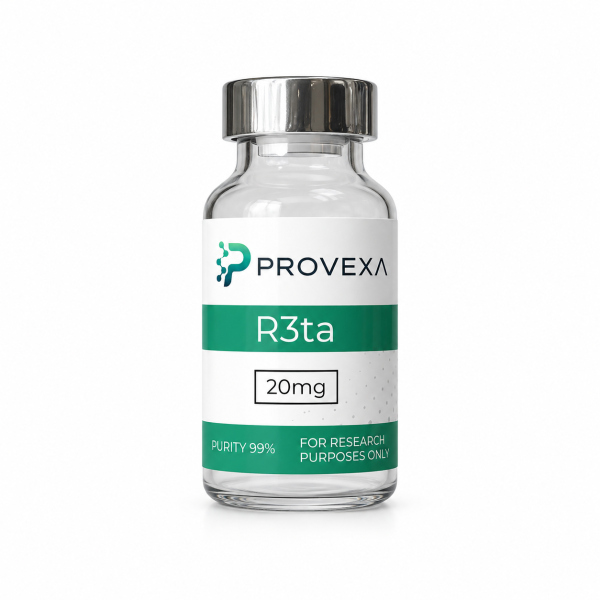
R3ta 20mg (Retatrutide Peptide) is an ultra-pure, high-grade lyophilised biochemical structure meticulously engineered for advanced metabolic research models and systematic cellular evaluation. As a premier standalone laboratory reagent, this high-purity research peptide is tailored specifically for complex scientific investigations probing into biological signaling cascades, multi-receptor affinity metrics, and downstream endocrine regulation frameworks. In cutting-edge laboratory environments, molecular biologists and laboratory technicians utilize this compound to dissect intricate GLP-1, GIP, and glucagon receptor interactions, gathering crucial baseline data points regarding energetic homeostasis, biochemical pathways, and advanced glucose metabolism networks.
The synthesis profile of this compound guarantees an uncompromised molecular architecture, preserving its structural consistency during sensitive in-vitro testing procedures and continuous comparative mapping. This product batch is strictly manufactured as a laboratory-exclusive solution, meaning it is intended solely for professional research and laboratory use only and has not received clearance or validation for human therapeutic applications, clinical procedures, or consumer diagnostic administration.
What is Retatrutide Peptide?
The design and synthesis of Retatrutide Peptide represents a major technical breakthrough within the spectrum of modern endocrinology and molecular pharmacology research. Functioning as a breakthrough synthetic triple-hormone receptor agonist (tri-agonist), this compound is deliberately structurally optimized to concurrently target three crucial metabolic pathways: the glucose-dependent insulinotropic polypeptide (GIP) receptor, the glucagon-like peptide-1 (GLP-1) receptor, and the glucagon receptor (GCGR). When introduced to controlled testing cell lines, researchers closely analyze Retatrutide Peptide to document its unique multi-pathway affinity profile, observing how this unified approach influences the following observational baselines:
- Pancreatic Signal Modulation: Evaluating how continuous exposure to the tri-agonist shifts standard regulatory markers governing pancreatic beta-cell stability, cellular protection, and sequential insulin secretion patterns.
- Energy Expenditure Amplification: Observing mitochondrial adjustments and tracking cellular metabolic enhancement pathways to map out systemic fat oxidation and thermogenesis dynamics.
- Central Satiety Transduction: Investigating the neuro-endocrine signaling mechanisms that handle appetite-related feedback loop interactions within central nervous system models.
- Adipocyte Response Mechanics: Mapping out lipid storage variances and tracking changes in adipose tissue behavior within dynamic weight management research models.
By targeting three distinct receptor networks in a single molecular layout, this complex compound bypasses the limitations of traditional single or dual-agonist variants. This structural integration provides a broader benchmarking environment, firmly establishing Retatrutide Peptide as an invaluable asset for mapping modern metabolic conditions, cellular energy expenditure, and advanced therapeutic targets.
Key Structural Features & Quality Controls
Every single batch of R3ta 20mg undergoes exhaustive production methodologies designed to satisfy strict empirical expectations. Our commitment to structural purity translates into reliable and repeatable testing cycles. Primary benchmarks include:
- Vacuum-Dried Lyophilisation: The peptide undergoes an advanced flash freeze-drying process, locking in its primary sequence structure, maximizing storage lifespan, and stopping ambient molecular breakdown over extended periods.
- Verified HPLC & MS Purity: Each product vial is verified using High-Performance Liquid Chromatography (HPLC) and Mass Spectrometry (MS). This process guarantees an ultra-high chemical purity profile, keeping your laboratory results clear of contaminants or synthesis remnants.
- Triple-Target Receptor Affinity: Precision-engineered side-chain modifications ensure uniform binding across GIP, GLP-1, and glucagon receptors, providing reliable multi-receptor agonist metrics.
- Thermal Threshold Adaptation: Formulated to maintain underlying molecular bond stability across varied physiological incubation environments and laboratory cell cultures.
- Precision Lab Allocation: Delivered in a heavy-duty, secure 20mg research vial format, giving researchers the volumetric flexibility required for detailed multi-stage reconstitution and serial dilution tracking.
Advanced Research Applications
The innovative design of Retatrutide Peptide allows for wide-ranging utility across diverse investigative protocols. Institutional laboratories, university biochemistry departments, and standalone pharmaceutical discovery units utilize this compound for extensive benchmarking projects, focused mainly on:
- Metabolic Syndrome Mapping: Assessing how simultaneous receptor binding balances insulin release, alters glucagon suppression curves, and affects baseline blood sugar management.
- Obesity and Lipolysis Studies: Measuring the molecule’s specific influence on fat tissue breakdown, brown adipose tissue activation, and overall metabolic rate acceleration models.
- Insulin Sensitivity Pathways: Reviewing the cellular mechanics of glucose uptake within skeletal muscle and hepatic tissues, helping track variances in established insulin resistance pathways.
- Hormonal Axis Interaction: Exploring the systemic feedback mechanisms when cells are exposed to triple-agonist setups, charting variations in endogenous hormone production and receptor down-regulation metrics.
Reconstitution and Storage Standards
To safeguard the long-term chemical performance of Retatrutide Peptide, precise laboratory management standards must be strictly followed. For optimal dissolution, the lyophilised powder should be carefully reconstituted using sterile Bacteriostatic Water or standard laboratory-grade saline solution, gently swirling without vigorous agitation to protect the delicate peptide chains.
Prior to liquid reconstitution, the dry vial must be kept in a controlled freezer environment at -20°C to secure long-term stability. Once reconstituted into liquid form, the solution must be stored between 2°C and 8°C and used within a limited timeline to ensure optimal experimental accuracy and avoid accidental degradation.
Important Notice
This analytical compound is strictly provided for in-vitro laboratory research purposes only.
It is not intended for human or animal consumption, therapeutic treatment, or medical applications. The molecule is explicitly classified as a laboratory reagent and must never be treated as a commercial drug, prescription medication, food additive, or over-the-counter consumer supplement.