
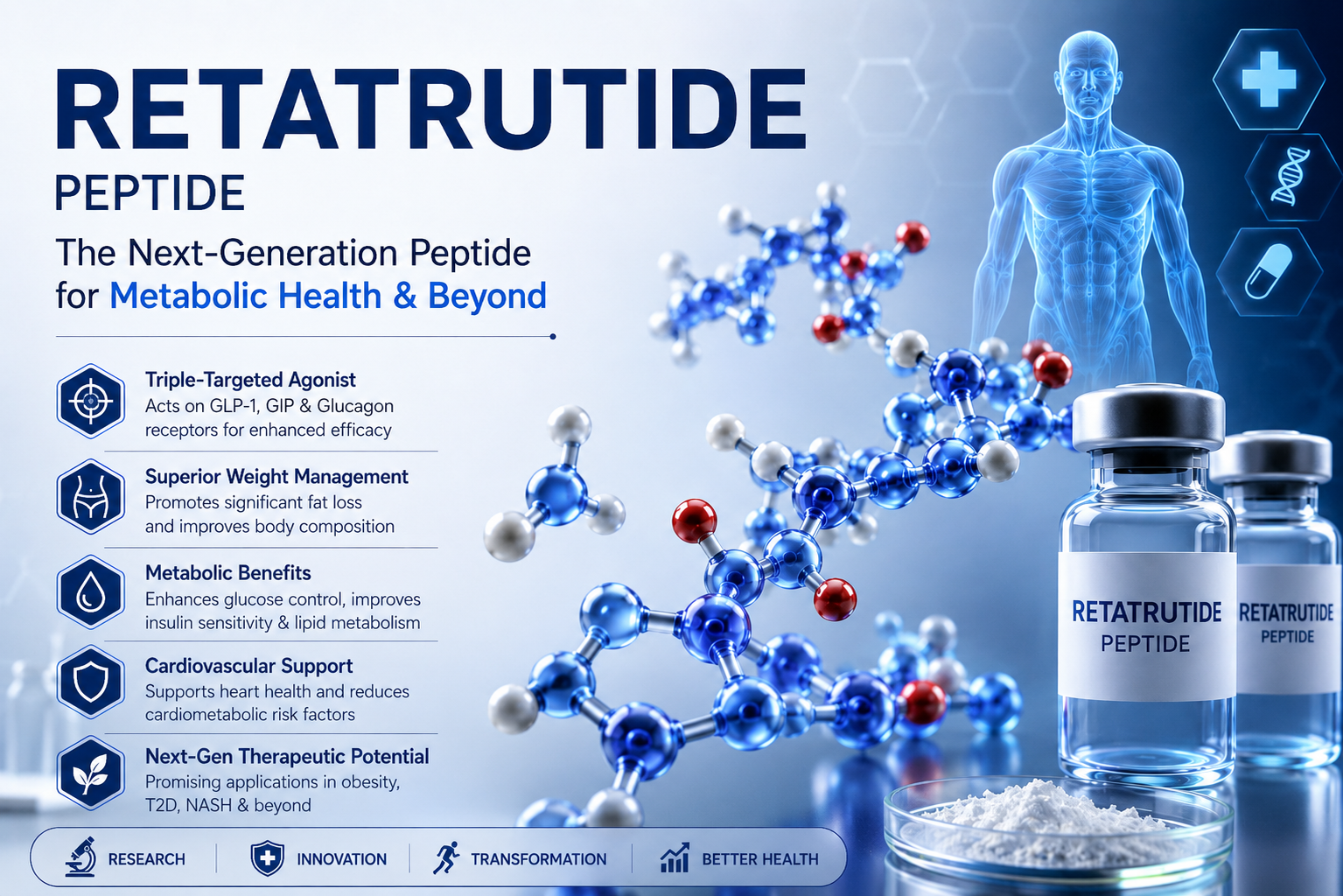

The world of metabolic research and peptide science is evolving rapidly, with new compounds showing promising potential for weight management and metabolic health. One of the most talked-about developments in recent years is the retatrutide peptide. Researchers and healthcare professionals are increasingly interested in this innovative peptide because of its unique multi-receptor mechanism and potential effectiveness in obesity and metabolic disorder studies.
As interest in advanced peptide therapies continues to grow, retatrutide peptide has emerged as a major focus within scientific and pharmaceutical communities. Early clinical research suggests that this compound may offer significant benefits compared to previous generations of weight management peptides.
In this article, we will explore what retatrutide peptide is, how it works, its potential benefits, ongoing research, possible side effects, and why it is attracting so much attention in the health and wellness industry.
What Is Retatrutide Peptide?
Retatrutide peptide is an investigational triple hormone receptor agonist developed for obesity and metabolic disease research. Unlike many traditional weight management compounds that target only one receptor pathway, retatrutide works by activating three important metabolic hormone receptors simultaneously.
These include:
- GLP-1 receptor
- GIP receptor
- Glucagon receptor
This triple-action approach is what makes retatrutide peptide particularly unique and scientifically exciting.
The peptide is currently being studied for its potential role in:
- Weight reduction
- Appetite control
- Fat metabolism
- Blood sugar regulation
- Energy expenditure
- Metabolic health improvement
Researchers believe that targeting multiple metabolic pathways at once may lead to more substantial and sustainable results.
How Retatrutide Peptide Works
Understanding how retatrutide peptide functions requires basic knowledge of metabolic hormones and receptor signaling.
GLP-1 Receptor Activation
GLP-1, or glucagon-like peptide-1, is a hormone involved in appetite regulation and blood sugar control. Activating GLP-1 receptors may help:
- Reduce hunger
- Slow gastric emptying
- Improve insulin secretion
- Increase feelings of fullness
This mechanism is similar to several modern weight management medications currently available.
GIP Receptor Activation
GIP stands for glucose-dependent insulinotropic polypeptide. This hormone influences insulin release and energy balance.
GIP receptor activation may contribute to:
- Better glucose regulation
- Improved metabolic efficiency
- Enhanced fat metabolism
Scientists believe combining GIP and GLP-1 activation may create stronger metabolic effects than using either pathway alone.
Glucagon Receptor Activation
The glucagon receptor plays a major role in energy expenditure and fat burning.
Activation of this receptor may help:
- Increase calorie burning
- Improve fat oxidation
- Support weight reduction
- Enhance metabolic rate
The inclusion of glucagon receptor activity is one reason why retatrutide peptide is considered highly innovative in obesity research.
Why Retatrutide Peptide Is Gaining Attention
The global obesity epidemic has created increasing demand for more effective metabolic treatments. Many individuals struggle to achieve sustainable weight loss through diet and exercise alone, leading researchers to investigate advanced peptide therapies.
Retatrutide peptide has gained attention because early studies suggest it may produce substantial weight reduction compared to older treatment approaches.
Several factors contribute to its growing popularity.
Multi-Pathway Mechanism
Most traditional compounds target only one metabolic receptor. Retatrutide’s triple-action mechanism potentially provides more comprehensive metabolic effects.
Significant Weight Loss Potential
Early clinical trials have shown impressive weight reduction outcomes in study participants. Some results have generated comparisons with the most advanced obesity therapies currently under development.
Metabolic Health Benefits
Researchers are also investigating whether retatrutide peptide may improve metabolic markers such as blood glucose levels and insulin sensitivity.
Scientific Innovation
The peptide represents a new direction in metabolic medicine, combining multiple hormone pathways into one compound.
Potential Benefits of Retatrutide Peptide
Although research is ongoing and regulatory approvals may still be pending in some regions, scientists are studying several possible benefits of retatrutide peptide.
Appetite Suppression
One of the most notable effects associated with retatrutide research is appetite reduction. By influencing satiety hormones, the peptide may help individuals consume fewer calories naturally.
Weight Management Support
The combination of reduced appetite and increased energy expenditure may contribute to substantial weight reduction.
Enhanced Fat Burning
Glucagon receptor activation may support fat oxidation and improved metabolic efficiency.
Blood Sugar Regulation
The peptide’s hormonal activity may assist with glucose control and insulin function.
Improved Energy Balance
Retatrutide peptide may influence how the body uses and stores energy, potentially improving overall metabolic performance.
Potential Cardiometabolic Benefits
Researchers are also exploring whether weight reduction and metabolic improvements associated with retatrutide may positively affect cardiovascular health markers.
Retatrutide Peptide and Obesity Research
Obesity remains one of the most significant public health challenges worldwide. Excess body weight is linked to numerous health complications, including:
- Type 2 diabetes
- Cardiovascular disease
- High blood pressure
- Sleep apnea
- Joint problems
- Fatty liver disease
Traditional weight loss methods are often difficult to maintain long term. As a result, pharmaceutical research has increasingly focused on peptide-based therapies that target appetite and metabolism.
Retatrutide peptide is considered especially promising because of its broad metabolic activity. Clinical trials are examining how effectively it may help individuals with obesity achieve meaningful weight reduction while improving metabolic health markers.
Some researchers believe triple receptor agonists may represent the next major advancement in obesity treatment science.
Retatrutide Peptide vs Other Peptides
The peptide industry has seen growing interest in compounds such as semaglutide and tirzepatide. Retatrutide peptide is often compared with these compounds because of their shared focus on metabolic pathways.
However, retatrutide differs in one major way.
Triple Agonist Activity
While some peptides activate one or two hormone receptors, retatrutide targets three receptors simultaneously:
- GLP-1
- GIP
- Glucagon
This broader activity may potentially produce stronger metabolic effects.
Energy Expenditure
The glucagon receptor component may increase calorie burning in addition to appetite suppression.
Research Interest
Because of its unique design, retatrutide peptide has become a major focus in advanced metabolic research.
Possible Side Effects of Retatrutide Peptide
As with many metabolic peptides, retatrutide may produce side effects in some individuals. Since research is still ongoing, scientists continue monitoring its safety profile carefully.
Reported or potential side effects may include:
- Nausea
- Vomiting
- Diarrhoea
- Constipation
- Fatigue
- Reduced appetite
- Gastrointestinal discomfort
The severity and frequency of side effects can vary between individuals and dosage levels.
Because retatrutide peptide is still under investigation, individuals should only use such compounds under appropriate medical supervision and according to local regulations.
Importance of Professional Guidance
Peptide therapies should never be approached casually. Professional medical guidance is essential when evaluating any metabolic treatment or research compound.
Healthcare professionals can help assess:
- Suitability
- Medical history
- Potential risks
- Drug interactions
- Proper dosage considerations
- Monitoring requirements
Self-medication or use of unregulated products may carry significant risks.
The Future of Retatrutide Peptide
The future of retatrutide peptide research appears highly promising. As clinical studies continue, scientists hope to better understand its long-term effectiveness and safety.
Several factors may contribute to its future importance in metabolic medicine.
Growing Demand for Obesity Treatments
Global obesity rates continue to rise, increasing demand for effective therapeutic options.
Advancements in Peptide Science
Modern biotechnology allows researchers to design increasingly sophisticated peptide compounds.
Personalized Medicine
Future metabolic treatments may become more tailored to individual biology and patient needs.
Expanded Research Applications
Beyond obesity, researchers may exploreretatrutide peptide for additional metabolic and cardiometabolic applications.
Why the Peptide Industry Is Expanding
The peptide industry has experienced enormous growth in recent years. Advances in biotechnology, medical research, and pharmaceutical development have accelerated interest in peptide-based therapies.
Peptides are now being studied in areas including:
- Weight management
- Muscle research
- Anti-aging science
- Hormone regulation
- Recovery support
- Metabolic health
Retatrutide peptide represents part of this broader movement toward advanced targeted therapies.
Scientific Interest and Market Growth
The commercial and scientific interest surrounding metabolic peptides continues to increase globally. Pharmaceutical companies are investing heavily in obesity research because of the growing demand for effective solutions.
As clinical trial data emerges, retatrutide peptide may become one of the most influential compounds in the future of metabolic medicine.
Its unique triple receptor mechanism sets it apart from many previous therapies and demonstrates how rapidly peptide science is evolving.
Conclusion
Retatrutide peptide is one of the most exciting developments in modern metabolic research. Its triple-action receptor activity involving GLP-1, GIP, and glucagon pathways makes it a highly innovative compound within obesity and metabolic health studies.
Researchers are exploring its potential benefits for appetite control, weight reduction, fat metabolism, and blood sugar regulation. Early findings suggest that retatrutide peptide may offer powerful metabolic effects compared to older treatment approaches.
Although research is still ongoing, the growing interest surrounding this peptide highlights the future direction of advanced metabolic therapies. As obesity and metabolic disorders continue to affect millions worldwide, innovative compounds like retatrutide peptide may play a major role in shaping future treatment strategies.
For researchers, healthcare professionals, and individuals interested in the future of peptide science, retatrutide peptide represents a significant advancement worth watching closely.