
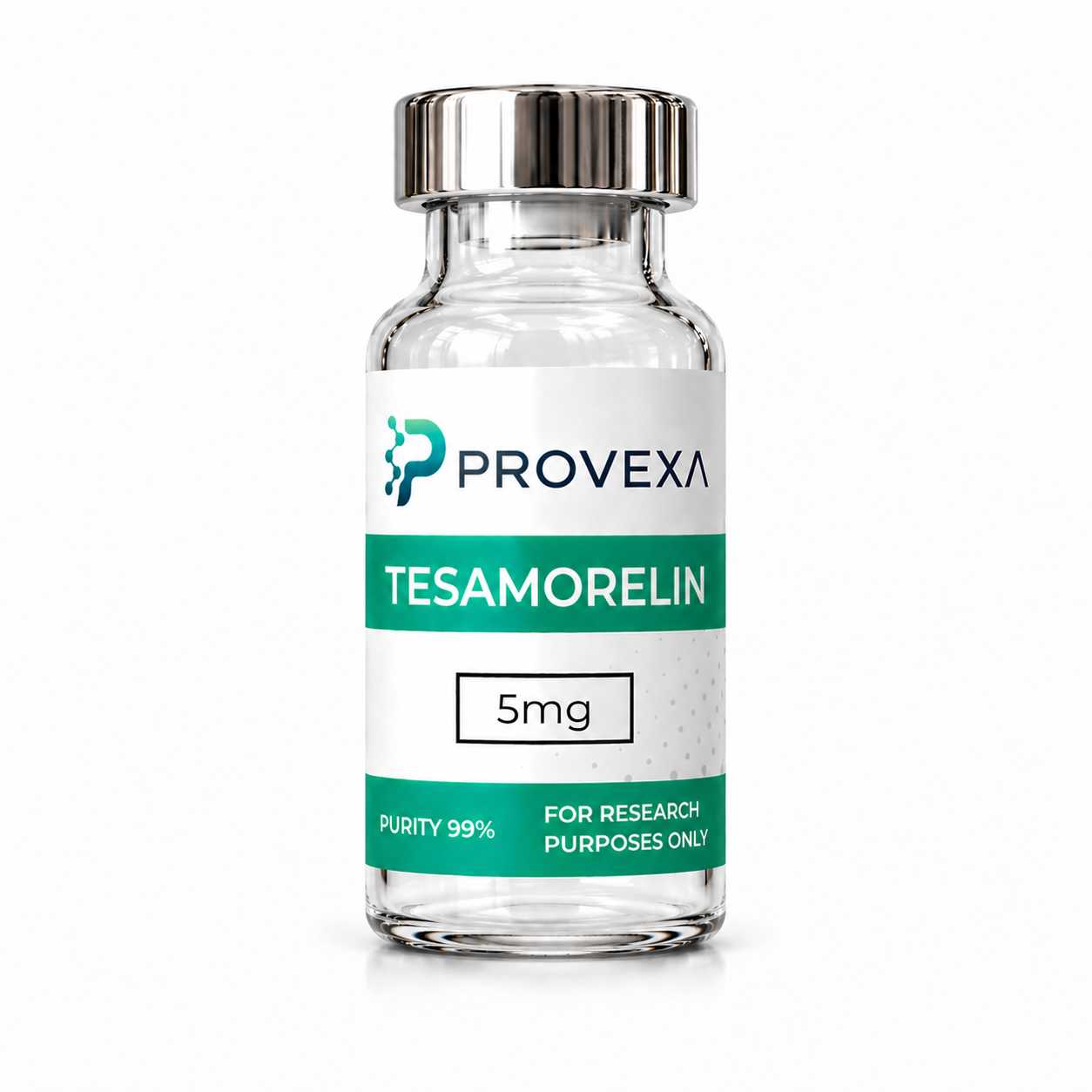
PT 141 Peptide
Advanced Research Peptide for Melanocortin Receptor Studies
The preparation of PT 141 peptide is an ultra-pure, synthetic biochemical complex widely studied in controlled laboratory settings. As an advanced research reagent, it is specifically formulated to allow investigators to evaluate melanocortin receptor activity, neuropeptide signalling pathways, and fundamental biochemical response mechanisms within isolated cellular environments.
At Provexa Labs, every PT 141 peptide batch is produced under the most stringent quality-control standards. By enforcing rigorous purity verification protocols, we ensure that researchers receive a highly stable, consistent, and reliable compound. This dedication to manufacturing excellence supports uninterrupted longitudinal studies and dependable analytical benchmarking in professional biochemical laboratories.
What is PT 141 Peptide?
Structurally, PT 141 peptide (also referred to in scientific literature as bremelanotide) is a synthetic heptapeptide analogue of the naturally occurring alpha-melanocyte-stimulating hormone (α-MSH). Unlike its predecessor, Melanotan II, this specific sequence was actively isolated and developed to remove melanogenesis (pigmentation) properties, allowing researchers to focus exclusively on its powerful neuro-stimulatory effects.
This peptide operates through a unique pathway by acting as a non-selective agonist of the melanocortin receptors, primarily targeting the MC3-R and MC4-R receptor subtypes located within the central nervous system (CNS). By bypassing the vascular system and directly engaging neurochemical networks, PT 141 peptide presents an incredibly fascinating compound for mapping complex neurological signalling and evaluating central behavioural responses in advanced in-vitro models.
Mechanism of Action in In-Vitro Models
When introduced to isolated cellular tissues, PT 141 peptide binds aggressively to melanocortin receptors, initiating a cascade of intracellular events. Laboratory technicians closely observe these interactions to chart variations in cellular cyclic AMP (cAMP) accumulation and document the excitation of distinct neural pathways. This precise receptor-binding profile makes the peptide an invaluable tool for studying neurotransmitter release mechanisms, receptor down-regulation over continuous exposure, and the broader modulation of central nervous system regulatory frameworks.
Key Features of PT 141 Peptide
Our laboratory-grade vials are synthesised using advanced formulation techniques to ensure experimental validity. The primary structural features include:
- High-Purity Formulation: Verified via HPLC and MS testing to ensure a contaminant-free PT 141 peptide compound for highly sensitive biochemical assays.
- Lyophilised Format: Vacuum freeze-dried to maintain delicate heptapeptide bonds and support significantly enhanced pre-reconstitution shelf stability.
- Targeted Design: Engineered specifically for precise melanocortin receptor (MC3-R/MC4-R) research studies.
- Batch Consistency: Secure manufacturing protocols ensure that every single vial delivers identical stoichiometric ratios for reliable comparative research.
- Research-Grade Standards: Manufactured exclusively for professional, institutional, and independent neurochemical laboratories.
Advanced Research Applications
The versatile molecular profile of this compound positions it as a major focal point across various scientific and neurological disciplines. Researchers commonly study PT 141 peptide in specialised areas including:
- Melanocortin Receptor Interactions: Evaluating the specific binding affinity and activation thresholds of MC3-R and MC4-R in isolated cellular cultures.
- Neurochemical Signalling Pathways: Charting variations in intracellular communication, neurotransmitter release, and central nervous system excitation models.
- Peptide Stability Analysis: Testing the biological half-life and enzymatic degradation rates of the heptapeptide structure within testing mediums.
- Experimental Response Mechanisms: Investigating theoretical models for advanced neurological therapies and physiological interventions.
Laboratory Handling, Quality Assurance, and Storage
Provexa performs extensive quality verification on every PT 141 peptide batch using strict analytical testing procedures (including High-Performance Liquid Chromatography) to maintain consistency, absolute purity, and laboratory-grade standards.
This compound is supplied in a lyophilised (freeze-dried) format to support enhanced storage stability. To preserve the molecular integrity of the powder, storage in a dedicated laboratory freezer at -20°C is highly recommended. For reconstitution, researchers should use sterile Bacteriostatic Water or a suitable biological buffer, employing gentle swirling techniques to prevent the shearing of fragile peptide chains. Once reconstituted into a liquid solution, it must be kept refrigerated strictly between 2°C and 8°C to prevent ambient degradation.
Safety and Compliance
This highly purified product is strictly intended and supplied for laboratory research use only.
- Not for human consumption or therapeutic application
- Not for veterinary use or animal testing
- Not intended for medical, diagnostic, or cosmetic applications
This material is classified exclusively as a laboratory chemical reagent. Researchers must rigorously follow all applicable laboratory handling, personal protection, and storage procedures when working with PT 141 peptide compounds.