

The demand for advanced weight loss treatments has increased rapidly in recent years. Scientists are now developing new peptide-based therapies that go beyond traditional diet and exercise approaches. One of the most advanced compounds in this category is retatrutide.
Understanding what is retatrutide peptide is important because it represents a new generation of metabolic drugs that may significantly change how obesity and type 2 diabetes are treated in the future.
Unlike older medications that focus on a single hormone pathway, retatrutide works on multiple metabolic systems at the same time. This makes it one of the most powerful experimental treatments currently being studied in clinical research.
What is Retatrutide Peptide?
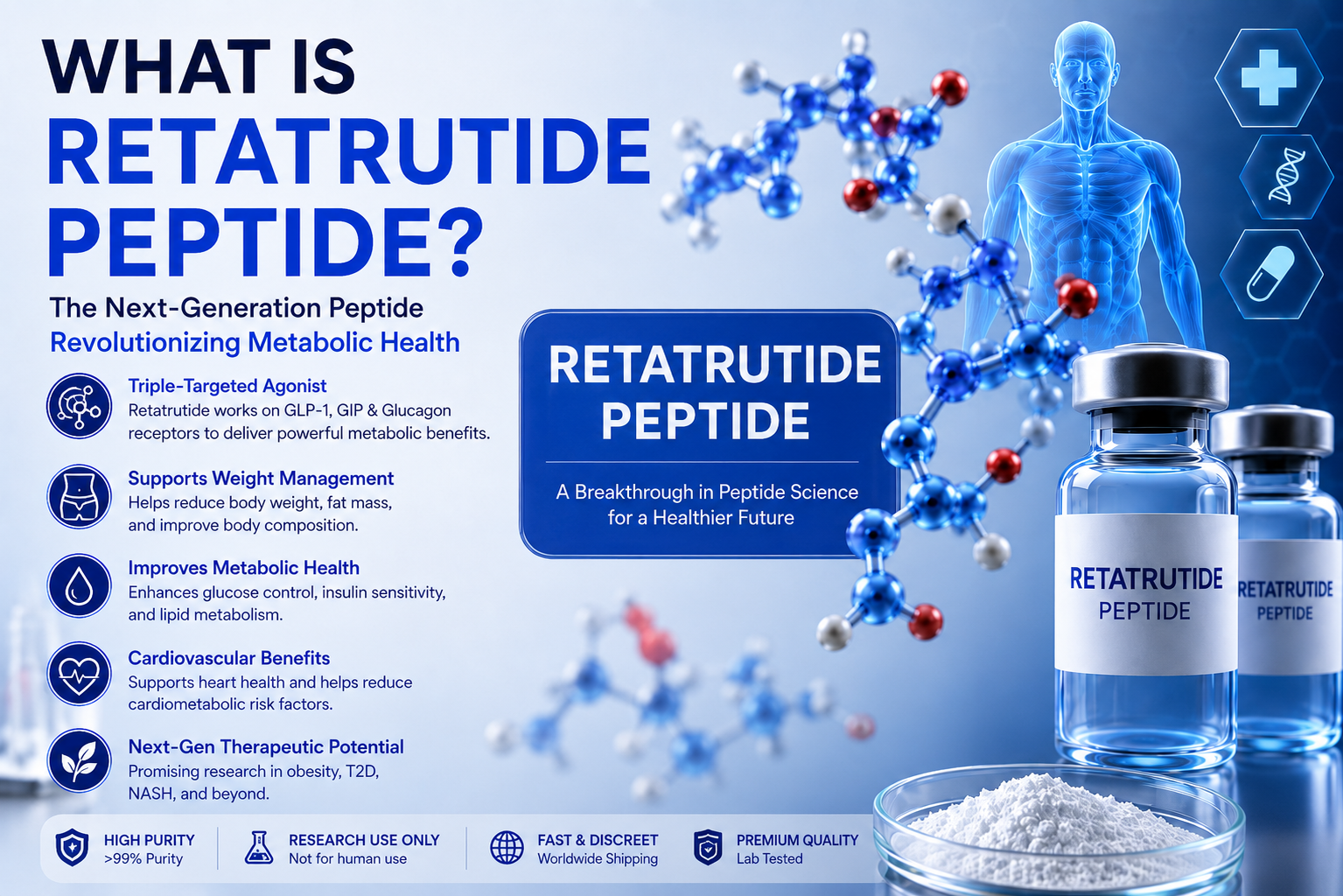
Retatrutide peptide is an investigational injectable drug developed for the treatment of obesity, type 2 diabetes, and metabolic disorders. It is classified as a triple receptor agonist because it activates three important hormone receptors in the body:
- GLP-1 (Glucagon-Like Peptide-1) receptor
- GIP (Glucose-Dependent Insulinotropic Polypeptide) receptor
- Glucagon receptor
These three hormones play a key role in controlling appetite, blood sugar levels, and energy balance. The keywordwhat is retatrutide peptide is widely searched because people want to understand how this new compound is different from existing weight loss medications like semaglutide and tirzepatide. Retatrutide is still under clinical development and is not yet approved for public or commercial use.
How Retatrutide Works in the Body
To understand what is retatrutide peptide, it is important to understand how it works inside the body. Retatrutide mimics natural hormones that regulate metabolism and appetite. Once injected, it interacts with multiple biological systems that control hunger, digestion, and fat storage. It works in three main ways:
- First, it reduces appetite by acting on the brain’s hunger centres. This helps people feel full faster and reduces overall food intake.
- Second, it improves blood sugar control by enhancing insulin response after meals. This helps stabilise glucose levels and reduces fat storage.
- Third, it increases energy expenditure by activating the glucagon receptor. This causes the body to burn more calories even at rest.
This combination of effects makes it significantly more powerful than older weight loss medications.
The Triple Mechanism Explained
The most important feature of retatrutide is its triple hormone action:
GLP-1 Receptor Activation
GLP-1 is a hormone that helps regulate appetite and digestion. When activated, it slows stomach emptying and increases satiety. This leads to reduced food intake and better calorie control.
GIP Receptor Activation
GIP improves how the body responds to insulin. It helps reduce blood sugar spikes after meals and improves metabolic efficiency.
Glucagon Receptor Activation
This is the most unique part of retatrutide. Glucagon increases energy use in the body and promotes fat burning. Unlike many weight loss drugs that only reduce appetite, this pathway actively increases calorie burning.
Together, these three mechanisms explain why what is retatrutide peptide is considered a breakthrough in metabolic science.
Benefits of Retatrutide Peptide
Retatrutide is being studied for multiple potential benefits:
- It may support significant weight loss by reducing hunger and increasing fat burning at the same time.
- It may improve blood sugar control, making it useful for patients with type 2 diabetes.
- It may help reduce liver fat, which is important for treating fatty liver disease.
- It may improve insulin sensitivity and overall metabolic health.
- It may reduce cardiovascular risk factors associated with obesity.
Because of these combined effects, interest in what is retatrutide peptide continues to grow in both medical and fitness communities.
Clinical Trial Results and Research Data
Clinical trials of retatrutide have shown strong and promising results. In Phase 2 studies, participants experienced significant weight reduction over a period of several months. Some patients lost more than twenty percent of their body weight, which is higher than most existing medications.
The results also showed improvements in blood sugar levels, liver function, and overall metabolic markers. Researchers believe that retatrutide may outperform current leading drugs if long-term studies confirm its safety and effectiveness. However, it is important to understand that these results are still experimental and not yet confirmed for public medical use.
Side Effects and Safety Concerns
Like all powerful metabolic drugs, retatrutide may cause side effects. Common side effects observed in trials include nausea, vomiting, diarrhoea, reduced appetite, and fatigue. Some participants also reported gastrointestinal discomfort during dose adjustment periods.
Because the drug is still under research, long-term safety data is not yet available. This is why regulatory approval has not yet been granted. Understanding these risks is important when researching what is retatrutide peptide.
Retatrutide vs Other Weight Loss Peptides
Retatrutide is often compared with other weight loss medications:
- Semaglutide works only on the GLP-1 receptor, which mainly reduces appetite.
- Tirzepatide works on GLP-1 and GIP receptors, offering improved weight loss and glucose control.
- Retatrutide goes one step further by activating GLP-1, GIP, and glucagon receptors together.
This triple action makes it more powerful in terms of both appetite control and fat burning. Because of this difference, retatrutide is considered a next-generation therapy in obesity treatment research.
Medical Future and Potential Use
Researchers believe that retatrutide could play a major role in the future of obesity treatment. If approved, it may become one of the most effective medications for weight management ever developed. However, it is still undergoing clinical trials and is not available for general medical prescription. Future research will determine its long-term safety, optimal dosage, and effectiveness in large populations. The growing interest in what is retatrutide peptide shows how important metabolic science has become in modern healthcare.
Frequently Asked Questions
What is retatrutide peptide used for?
It is being studied for obesity, type 2 diabetes, and metabolic disorders.
Is retatrutide approved?
No, it is still in clinical trials and not approved for public use.
How does retatrutide work?
It works by activating GLP-1, GIP, and glucagon receptors to control appetite and increase fat burning.
Is it better than semaglutide?
Early research suggests it may be more effective, but more studies are needed.
Conclusion
So, what is retatrutide peptide It is a powerful experimental triple-agonist drug designed to treat obesity and metabolic diseases by targeting three hormone systems simultaneously.
Early clinical results are highly promising, showing strong weight loss and metabolic improvements. However, it is still under research and not yet available for public use. Retatrutide represents a major step forward in medical science and may redefine how obesity is treated in the future.